What You Actually Carry on a Dog Walk — and Which Pockets Hold It
Quick Answer: A dog walk needs four things carried: phone, keys, waste bags, and treats — and they want different pockets. Phones belong in a thigh pocket with a full-depth interior, not a shallow waistband pocket, because thigh pockets sit against a flat muscle and bounce less. Keys need a zip or a separate small pocket so they do not share space with the phone screen. Waste bags belong wherever you can reach one-handed. Treats belong in an outer layer pocket you can wipe out, never against your leg.
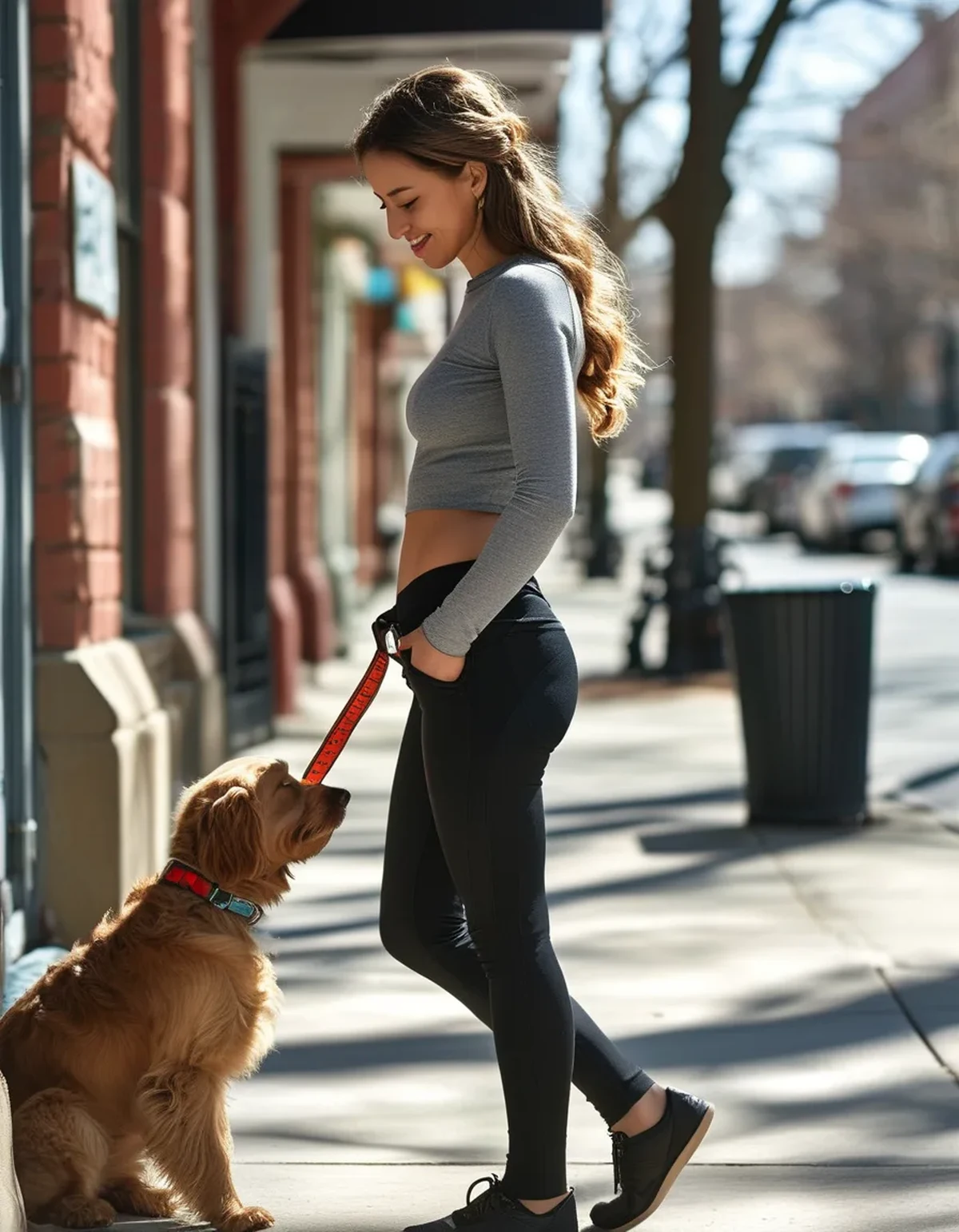
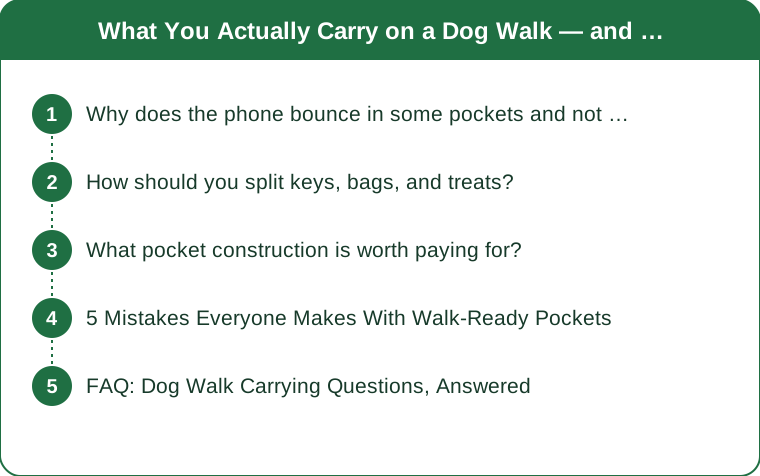
Why does the phone bounce in some pockets and not others?
Placement against muscle versus against soft tissue. A pocket sitting over the outer thigh rests on the vastus lateralis, which is relatively flat and firm through a walking stride. A pocket sitting at the hip or the back of the waistband sits over tissue that moves more, and the phone amplifies that movement.
Pocket depth relative to phone length matters just as much. A phone in a shallow pocket has its center of mass above the pocket opening, so it acts like a pendulum. In a full-depth pocket, the whole phone is enclosed and it moves with your leg rather than swinging against it.
Fabric tension is the third factor. A pocket cut into a compressive legging holds the phone against you. A pocket in a loose jogger lets it swing freely.
And there is a comfort point that gets overlooked: a phone in a pocket that flexes with your hip crease gets bent repeatedly, which is bad for the phone and irritating to walk with.
The practical hierarchy for a walk: mid-thigh side pocket > deep hip pocket > waistband pocket > back pocket. Back pockets are the worst option for anything you sit down with, and dog walks involve more sitting on benches and curbs than people expect.
How should you split keys, bags, and treats?
Keys need containment. A loose key set in the same pocket as a phone scratches the screen and, worse, works its way out during a stride. Options: a small zip pocket, a key clip attached inside a pocket, or a carabiner on the leash handle. The leash clip is genuinely the best answer for a short walk — you cannot leave the house without the leash.
Waste bags need one-handed access. You will be holding a leash with the other hand. A waistband pocket or a leash-mounted dispenser beats a thigh pocket here, because reaching a thigh pocket while bent over with a dog pulling is awkward.
Treats need a wipeable pocket. Training treats leave oil and crumbs. They should never go in a legging pocket that touches your skin, and they should not go in anything you cannot turn inside out. A jacket pocket, a dedicated treat pouch, or a silicone bag inside a pocket all work.
Phone gets the good pocket — deep, thigh-mounted, ideally with a zip if you have a dog who pulls suddenly.
And a note on wet items: a chewed tennis ball or a soaked toy needs somewhere that is not a fabric pocket. A clip-on pouch or a small dry bag saves the walk.
The overall principle: one item per pocket. Sharing is where things fall out.
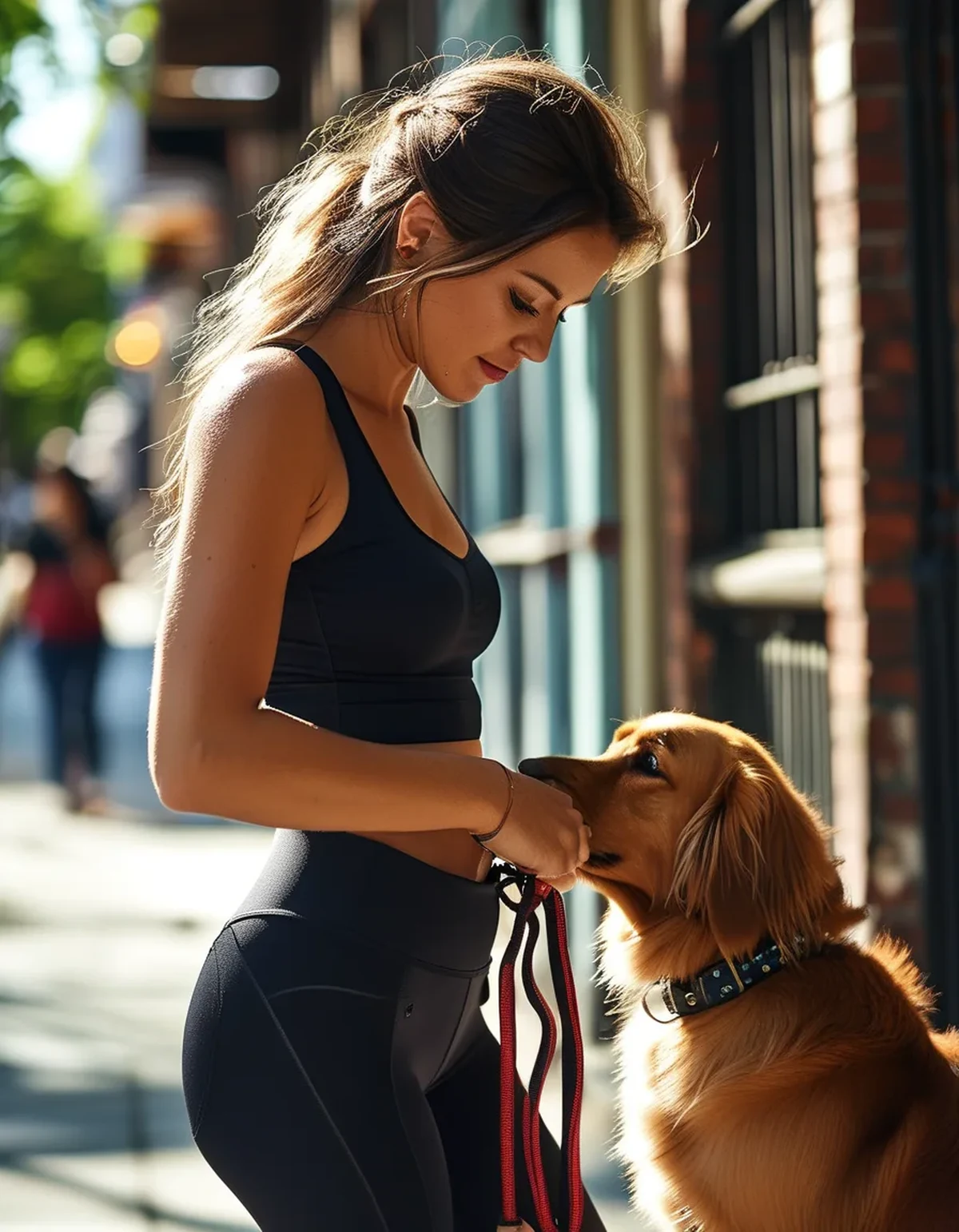
What pocket construction is worth paying for?
Bonded or laser-cut pocket openings rather than a stitched-and-turned edge. They lie flat, do not create a visible ridge under fitted fabric, and do not stretch out over time.
A second layer of fabric behind the pocket, so the phone is not directly against skin. This makes a real difference in heat and after rain.
Angled openings. A pocket angled slightly forward is far easier to reach mid-stride than a vertical one, especially while holding a leash.
Reinforced pocket corners. The bottom corners take the phone’s weight, and it is where cheap pockets tear first. A bar tack there is a good sign.
Elastic or gripper at the opening. A pocket that closes gently around the phone holds it during a sudden lunge; an open one does not.
Zips that lie flat. A raised zip on a thigh pocket presses into you when you sit.
What is not worth paying for: a huge number of pockets. Four pockets on a legging usually means four shallow ones. Two well-built pockets beat five token ones every time.
And check that the pocket does not distort the fit — a poorly integrated pocket panel creates a visible bulge or pulls the leg fabric sideways even when empty.
5 Mistakes Everyone Makes With Walk-Ready Pockets
1. Using the back pocket. You sit on curbs, benches, and the car seat. Back pockets are for standing.
2. Putting keys and phone together. One scratched screen is more expensive than any pair of leggings.
3. Trusting a waistband pocket with a full-size phone. Waistband pockets are designed for a card, a key, or a small snack. A modern phone in one will migrate around your waist and eventually work loose when you bend.
4. Carrying treats loose in a pocket you will wash. Oil from training treats stains and holds odor, and it can survive a cold wash. Bag them.
5. Not testing the pocket while moving. A pocket that holds a phone standing still in a fitting room tells you nothing. Walk briskly, take a few stairs, and bend to pick something up — that is the actual test.
FAQ: Dog Walk Carrying Questions, Answered
Is a treat pouch worth it over pockets?
If you are actively training, yes. A clip-on pouch keeps the residue out of your clothing entirely and gives faster one-handed access, which matters for reward timing.
What about a hands-free leash belt?
Excellent for running with a dog and for anyone whose dog walks reliably. Most include pockets sized correctly for phone and bags, which solves the whole problem in one purchase. Less useful with a strong puller, where you want direct hand control.
Do pockets weaken leggings?
A well-constructed pocket does not. A poorly attached one creates a stress point at the corners and can pull the surrounding fabric out of shape. Look for reinforced corners.
Where do you put the leash when you need both hands?
Around your waist or over your shoulder is common, but for anything larger than a small dog a clip-on belt or a carabiner on a bag strap is safer than a loop you cannot release quickly.
TL;DR:
- Mid-thigh side pockets hold a phone best — deep, against firm muscle, minimal bounce.
- Keys go on the leash carabiner or a zip pocket, never with the phone.
- Waste bags need one-handed access; treats need a wipeable, separate pocket.
- Look for bonded openings, reinforced corners, angled entry, and a second fabric layer.
- Two good pockets beat five shallow ones. Test them while walking, not standing.
Walks are short and frequent, which means small annoyances repeat daily. Getting the pocket assignment right once fixes it for good.
See It in Motion
Seen here: Super High Waist Embossed Yoga Leggings with Inner Pocket — shop it on bubblelime.com
Keep Reading
This article is for general informational and styling purposes only. Fit, sizing, and product availability may vary.