Why Your Dog Pulls Harder on Cool Mornings, and What It Does to Your Shoulder
Quick Answer: Cool air raises activity levels in most dogs - they are more comfortable moving, scent carries better in cool damp conditions, and there is far more novel scent information around after a summer of dry ground. The result is more pulling, more sudden lunging and more sustained tension on the lead. For the human, that translates into repeated sudden loads on one shoulder, usually with the arm extended and the elbow locked. Switch to a hands-free or cross-body lead, keep the elbow bent, and swap sides every few minutes.
The dog that walked politely all August has decided that September is different.
The dog is right, and your shoulder is about to find out.
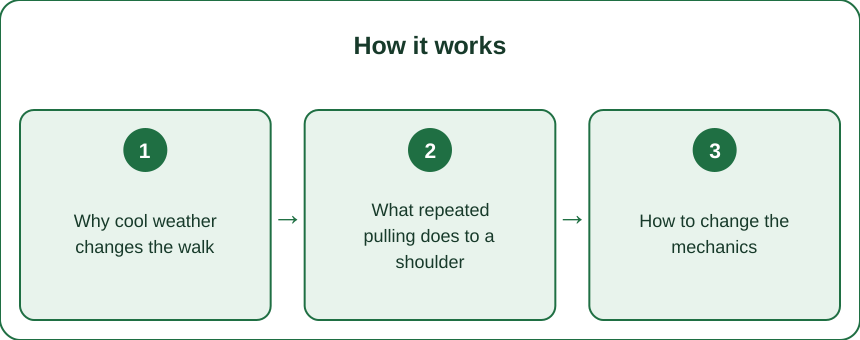
Why cool weather changes the walk
Dogs are more comfortable exerting themselves in cool air. Panting is their primary cooling mechanism and it is far less limiting at 55F than at 85F, so the same dog simply has more available output.
Scent behaves differently in cool, damp conditions. Cooler air and higher humidity hold scent molecules closer to the ground and preserve them longer, which means dramatically more information available to a nose than on a hot dry afternoon.
Autumn brings new scent traffic. More wildlife movement, more people out walking, decaying leaf matter and changing vegetation all add novel input, and novelty is what drives the sudden pull.
Daylight timing shifts the walk into busier periods. A walk that was quiet at 7am in July is at dawn in October, which changes both the wildlife and the human traffic your dog encounters.
And most dogs have had a low-activity summer, so the first cool weeks combine high motivation with reduced conditioning - which is where the sudden lunging comes from.
What repeated pulling does to a shoulder
A sudden lunge on a straight arm loads the shoulder at its least stable position. The arm extended and the elbow locked transmits the force directly to the joint rather than through the muscles built to absorb it.
It is the repetition that matters, not any single pull. A dozen sharp tugs a walk, twice a day, is a substantial cumulative load on one side of the body.
It is entirely one-sided, and people almost never switch hands. Months of asymmetric loading produce an asymmetric problem, which typically shows up as neck and upper trap tightness before it shows up in the shoulder itself.
Wrist and thumb take a beating too. Wrapping a lead around the hand or gripping a loop concentrates force through small structures, and thumb-base pain is a common complaint among people who walk strong dogs.
And the bracing posture makes it worse - shoulders raised, arm forward, trunk leaning back. Holding that for forty minutes twice a day loads the neck and upper back continuously even when the dog is not pulling.
How to change the mechanics
Use a hands-free waist lead or a cross-body lead. This moves the load to your hips and trunk, which are built to absorb it, and it is the single most effective change available.
Keep the elbow bent at roughly 90 degrees when you do hold a lead. A bent elbow lets the muscles absorb the load; a locked one sends it to the joint.
Never wrap the lead around your hand or wrist. Use a loop you can release, since the injuries that come from being unable to let go are far worse than the ones that come from a sudden pull.
Swap sides deliberately every few minutes. Set it on a landmark - every corner, every block - because it will not happen on feel alone.
Use a well-fitted front-clip harness rather than a collar for a dog that pulls. It reduces the force reaching you and is considerably better for the dog’s neck.
And train the loose-lead behaviour, since equipment manages the symptom. Stopping when the lead goes tight and moving when it slackens is slow, boring and the only thing that actually changes the dog’s behaviour.
5 Mistakes That Turn a Dog Walk Into a Shoulder Problem
Wrapping the lead around your hand. It concentrates force through the fingers and thumb and removes your ability to release in an emergency.
Always holding the lead in the same hand. Entirely one-sided loading, repeated hundreds of times a week, for years.
Using a retractable lead with a strong dog. The constant light tension trains pulling, and a sudden lunge at full extension delivers a shock load with no ability to absorb it.
Bracing with a straight arm. The instinctive response to a lunge, and the position in which the shoulder is least able to handle it.
Ignoring early symptoms because it is only dog walking. Neck and shoulder pain that started in October and is still present in January is an overuse problem that needs assessment rather than another season of the same. This is general information, not medical advice.
FAQ: Dog Pulling and Your Shoulder, Answered
Why is my dog worse in autumn specifically?
Cooler air makes exertion easier, damp conditions carry scent better, and there is substantially more novel scent traffic than in late summer. All three raise arousal on the walk.
Are hands-free leads safe with a strong dog?
For most dogs, yes, and they load the body far better. For a very large dog that lunges hard, a waist lead can pull you off balance - a cross-body version with a quick release is the safer choice there.
Does a head halter help?
It reduces the force reaching you considerably, and it requires proper introduction and fitting. Many dogs need a week or two of acclimation before it works well.
Should I walk shorter distances if my shoulder hurts?
Change the mechanics first - hands-free lead, bent elbow, switching sides. Distance is rarely the problem; how the load is transmitted is.
When should I get shoulder pain looked at?
Pain lasting more than a few weeks, night pain, or weakness lifting the arm all warrant assessment rather than continued management. This is general information, not medical advice.
TL;DR:
- Cool air raises dogs’ activity, scent carries better in cool damp conditions, and autumn adds novel scent traffic - so pulling increases.
- Sudden pulls on a straight arm load the shoulder at its least stable position, hundreds of times a week, always on one side.
- A hands-free or cross-body lead shifts the load to your hips and trunk, which is the single biggest fix.
- Keep the elbow bent, never wrap the lead around your hand, and switch sides on a landmark rather than by feel.
- A front-clip harness reduces the force reaching you; loose-lead training is what changes the behaviour.
Shoulder pain that persists for weeks, wakes you at night, or comes with weakness deserves assessment. This is general information, not medical advice.
Keep Reading
This article is for general informational and styling purposes only. Fit, sizing, and product availability may vary.