Why Your Dog Walk Clothes Smell Before They Look Dirty
Quick Answer: Synthetic fabrics — which most outdoor and technical clothing is made from — are oleophilic, meaning they attract and hold oils. Body oils, dog oils and environmental residues bind into the fibre where normal detergent does not reach them, and bacteria feeding on those oils produce the smell. Because the residue is oil-based rather than dirt-based, the garment looks clean while smelling strongly. Standard washing removes the visible soil and leaves the oil, which is why the smell returns almost immediately.
It is a genuinely different problem from being dirty, and it needs a different solution.
Once you treat it as an oil problem rather than a dirt problem, it becomes fixable.
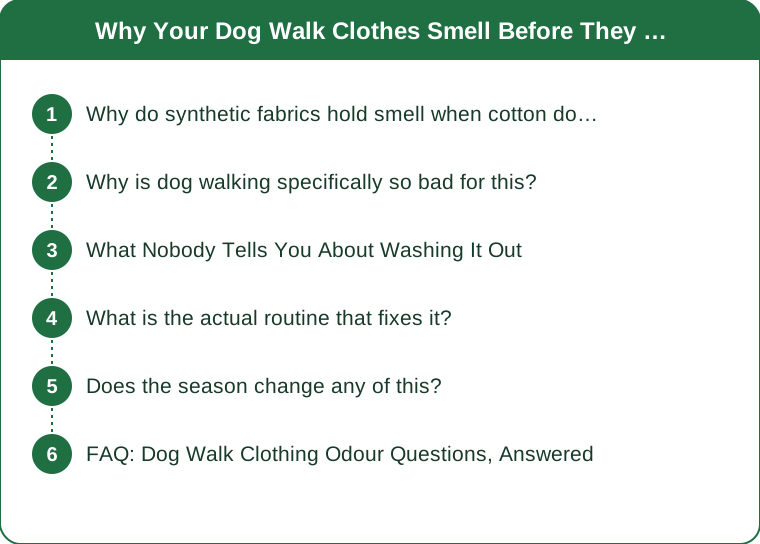
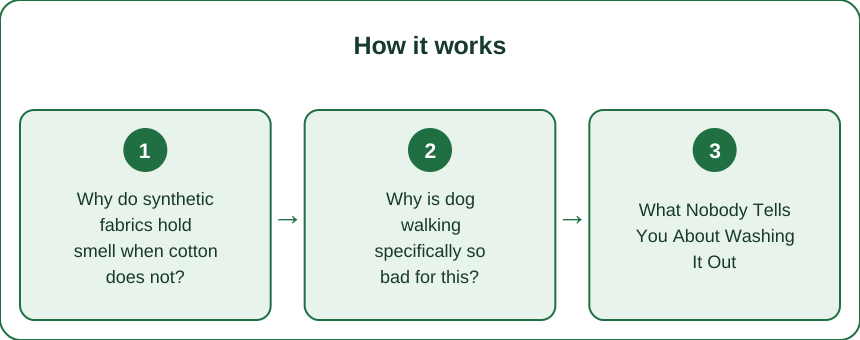
Why do synthetic fabrics hold smell when cotton does not?
Because of the chemistry of the fibres, and it is a well-studied difference.
Polyester and nylon are oleophilic — they have an affinity for oil. Body sebum, the natural oils in a dog’s coat, and the oily residues you pick up outdoors all migrate into the fibre structure and bind there.
Cotton is hydrophilic, meaning it attracts water rather than oil. It absorbs sweat and gets visibly dirty, and the residues it holds are more water-soluble and wash out more readily. Cotton smells less over time even though it holds more moisture in the moment.
The smell itself does not come from the oil. Bacteria metabolise those oils and produce volatile compounds — and those compounds are what you smell. Research on odour in textiles has consistently found higher odour intensity in polyester than in cotton or wool after the same wear.
This produces the specific pattern that is so frustrating:
The garment looks clean, because visible soil is a different thing entirely and does wash out.
The smell returns when the fabric gets warm or damp, because heat and moisture activate the bacteria and volatilise the compounds. This is why a jacket smells fine in the cupboard and smells strongly ten minutes into a walk.
And normal washing does not fix it, because standard detergent at low temperature is designed for water-soluble soil, and the oil is bound into the fibre rather than sitting on it.
Does this mean I should buy cotton?
For pure odour resistance, wool is the best performer and cotton beats polyester. But cotton is a poor choice for wet weather, and that trade-off is usually not worth making. Better to keep the technical fabric and wash it correctly.
Why is dog walking specifically so bad for this?
Because you are collecting oils from more sources than usual.
Dog coat oils transfer readily. Dogs produce sebum too, and their coats carry it. Every time a dog leans against your leg, jumps up, or shakes near you, oil transfers to your clothing. A wet dog transfers considerably more, because water carries the oils to the surface and then onto whatever it touches.
The wet dog smell itself is bacterial. The characteristic odour comes from volatile compounds produced by micro-organisms living on the dog’s skin and coat, released when the coat gets wet. Those same organisms and compounds end up on your jacket.
Environmental oils. Wet vegetation, mud, and pond or river water all carry organic material that binds into synthetic fabric.
The lead hand and the treat pocket are the concentration points. One sleeve gets more contact than the other, and a pocket that holds treats accumulates food oils that are particularly persistent. The treat pocket is very often the actual source of the smell people attribute to the whole garment.
And it is worn repeatedly without washing, because it looks clean. A dog-walking jacket might be worn twice a day for a fortnight between washes, which is far more wear than most garments get.
Worth checking, before you treat the whole garment: smell the pocket lining and the cuffs specifically. If those are the source, you have a much smaller problem than you thought.
What Nobody Tells You About Washing It Out
Fabric softener is actively making it worse. Softener works by depositing a waxy coating on fibres. That coating traps oils, reduces the fabric’s ability to be cleaned, and destroys the water-repellency and wicking of technical fabric. This is the single most common mistake, and stopping it improves things on its own.
More detergent is not the answer either. Excess detergent does not rinse out fully, and the residue holds odour compounds. Underdosing and overdosing both cause problems; the correct dose for the load is what works.
Warm water works better than cold for oils. Cold is gentler and it is worse at removing sebum. Check the care label, and use the warmest temperature it allows — often 30 or 40°C. This matters more than the detergent brand.
Soaking beats washing for this. A pre-soak of one to four hours in warm water gives time for the oil to be lifted. A 30-minute cycle does not.
White vinegar in a soak is genuinely effective. It helps break down residues and neutralises alkaline odour compounds. Roughly one cup in a basin of warm water, soak, then wash normally. Do not mix it with bleach, and do not use it on every wash if the fabric has a durable water repellent finish.
Sports and technical detergents are not a marketing invention. They are formulated with different surfactants and usually enzymes aimed at oil and protein soils, and they perform measurably better on this specific problem than a general detergent.
Air it after every walk rather than folding it away. Damp fabric in a dark cupboard is an incubator. Hanging it somewhere with airflow for an hour does more than most people would guess.
And the dryer sets the smell in. Heat bonds residual oils more firmly into synthetic fibre, and it also damages elastane and technical membranes. Never tumble dry something that already smells — you are fixing the problem in place.
What is the actual routine that fixes it?
For a garment that already smells, in order:
- Turn it inside out. The oils are on the inside surface, and washing it inside out puts them in contact with the water.
- Soak for one to four hours in warm water with either a cup of white vinegar or an oxygen-based cleaner, whichever suits the fabric.
- Wash at the warmest temperature the label allows, with a technical or sports detergent, correct dose, no softener.
- Run an extra rinse to clear residue.
- Air dry with good airflow, out of direct sun.
- Repeat if needed. Deeply held oil sometimes takes two cycles, and that is normal rather than a failure.
For keeping it clean afterwards:
- Air it after every walk, hung, with airflow, not folded.
- Wash the treat pocket lining separately or more often, or use a removable pouch instead.
- Never use fabric softener or dryer sheets on technical fabric.
- Wash it more often than it looks like it needs. Every four to six walks in wet weather is more realistic than waiting for visible dirt.
- Keep a dedicated dog towel and dry the dog before it dries itself on you.
And a note about waterproofs specifically: repeated washing removes the durable water repellent finish. If your jacket has started wetting out, it needs re-proofing rather than more washing, and there are wash-in products designed for exactly this. Do this at the start of autumn rather than in the middle of it.
What about wool?
Merino is genuinely more odour-resistant than synthetics, which is a real advantage for a base layer worn repeatedly. It is not a good outer layer in wet conditions, but as the thing next to your skin it substantially reduces the problem.
Does the season change any of this?
It gets worse from now on, for several reasons at once, so it is worth getting ahead of.
Wet dogs become the default. Autumn rain means the coat is wet on most walks, and a wet coat transfers far more oil and far more bacteria than a dry one. This is the single biggest seasonal factor.
Fabrics get thicker and layers multiply. More fabric, more surface area, more places for oil to bind, and heavier garments that are washed less often because drying them takes days.
Drying gets harder. A thick jacket takes a long time to air dry in a cold damp house, which tempts people toward the dryer — which sets the smell in permanently. Dry it somewhere with airflow rather than somewhere warm, and give it longer.
Mud and wet vegetation carry more organic material than dry summer ground.
And the garments get stored damp, because they come off wet and go into a cupboard or a car boot.
Practical things worth doing over the next few weeks:
- Wash and re-proof your waterproofs now, before the season rather than during it.
- Set up somewhere to hang wet gear with airflow — a hook in a porch or utility area beats a cupboard by a large margin.
- Buy or dedicate a proper dog towel and use it at the door.
- Switch to a merino base layer if you walk in the cold, for the odour resistance as much as the warmth.
- Consider a second walking jacket so one can dry fully while the other is worn. Alternating is the most effective single change for anyone walking twice a day in wet weather.
Does the smell mean the jacket is worn out?
No. Odour retention is a chemistry problem, not a durability one, and a correctly treated jacket usually recovers completely.
FAQ: Dog Walk Clothing Odour Questions, Answered
Why does it smell worse when I start walking?
Body heat and movement warm the fabric and release the volatile compounds. Cold, still fabric holds them in.
Will an odour-eliminating spray fix it?
It masks or neutralises temporarily. It does not remove the oil, so the smell returns. Useful between walks, not a solution.
Is vinegar safe on technical fabric?
Generally yes as an occasional soak, but avoid it on garments with a durable water repellent finish that you want to preserve, and check the care label.
Does washing with towels help scrub it out?
No, and towels shed lint into technical fabric and can damage membranes. Wash technical gear separately.
Why does one sleeve smell more?
The lead hand. It gets more contact with the dog, more contact with your own skin as you adjust the lead, and more environmental transfer.
Are antibacterial or silver-treated fabrics worth it?
They can reduce odour development for a period. The treatments diminish with washing, and they do not remove the underlying oil issue.
TL;DR:
- Synthetic fabrics are oleophilic — they bind oils, and bacteria feeding on those oils produce the smell.
- The garment looks clean because the residue is oil, not dirt, and standard cold washing does not remove it.
- Fabric softener makes it worse by coating the fibres and trapping oil. Stop using it entirely on technical gear.
- Soak in warm water with white vinegar, wash inside out at the warmest allowed temperature with a sports detergent, extra rinse.
- Never tumble dry something that smells — heat sets the oils permanently.
- Check the treat pocket and cuffs first. They are very often the actual source.
- Autumn makes it worse: wet dogs, thicker fabric, slower drying. Re-proof and set up a drying spot now.
The jacket is not dirty and it is not finished. It is holding something detergent was never designed to reach.
Keep Reading
This article is for general informational and styling purposes only. Fit, sizing, and product availability may vary.