Why One Sleeve Wears Out Long Before the Other on Dog Walk Jackets
Quick Answer: The leash hand does far more work than the other one — constant micro-corrections, sudden loading when the dog pulls, and repeated friction where the leash and hardware contact the cuff. Add that most people always hold the leash on the same side and never rotate, and one sleeve accumulates months of wear the other never sees. Switching hands weekly roughly doubles a jacket’s useful life.
Look at your walking jacket right now.
One cuff is pilled and stretched out and the other one looks like you bought it last week.
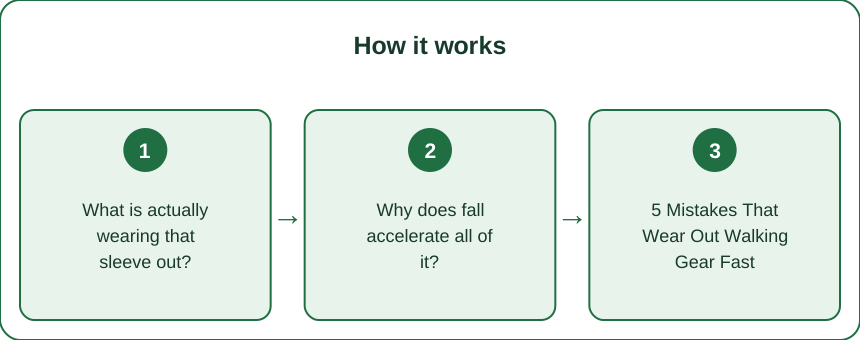
What is actually wearing that sleeve out?
Three separate mechanisms, all happening on the same 4 inches of fabric.
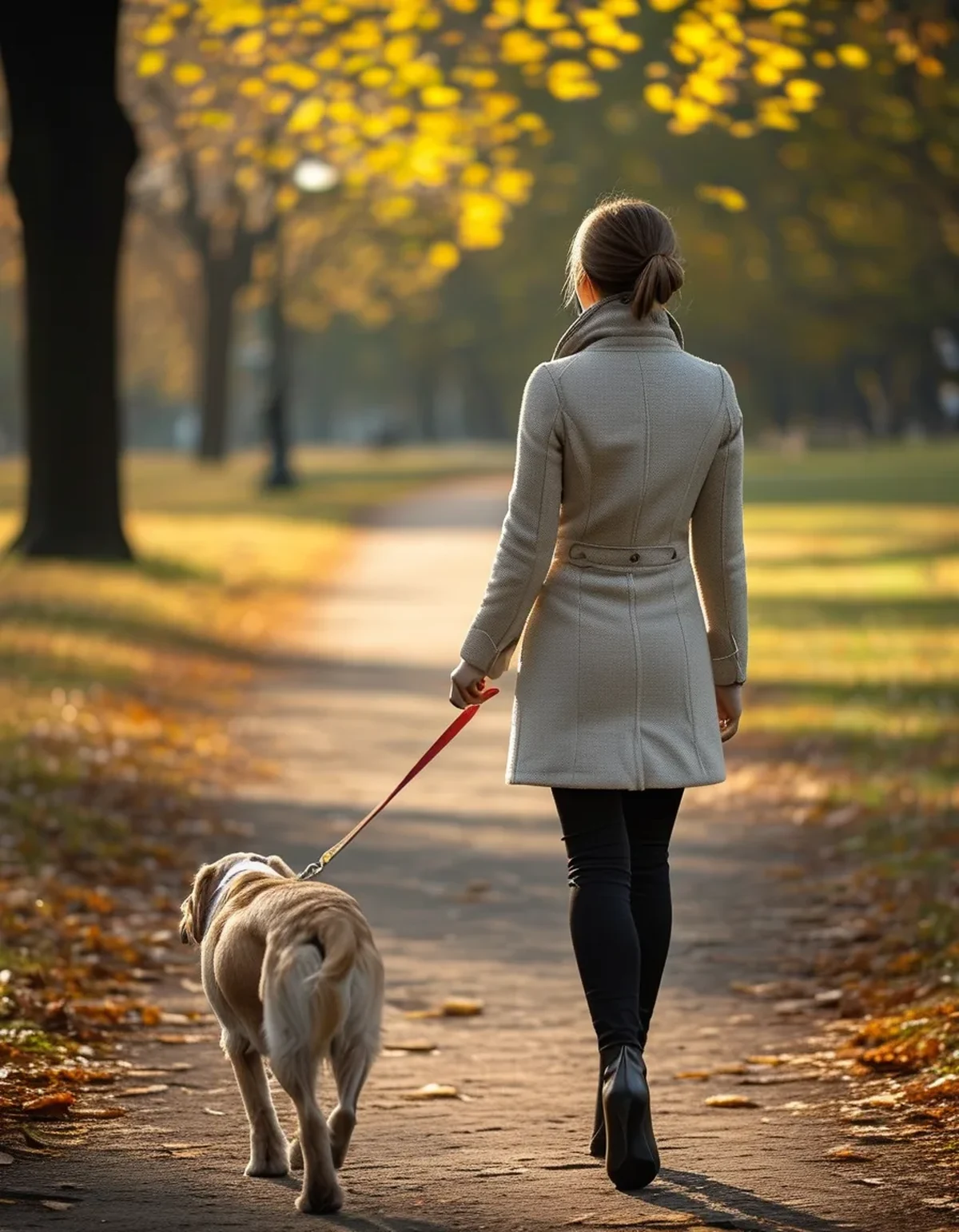
Friction from the leash itself. A leash resting across or against the cuff moves constantly — every step, every correction. Nylon webbing against knit fabric is genuinely abrasive over thousands of repetitions.
Hardware contact does the most damage. The metal clip, the O-ring, and any hardware on the handle all contact the sleeve at the same points. Metal against fabric is far harder on it than webbing, and it is why the wear appears as specific worn patches rather than general fading.
Sudden loading stretches the cuff. When a dog lunges, your arm tenses and the sleeve is pulled taut across the forearm. Repeated stretching under load permanently deforms elastic fibers, which is why that cuff no longer springs back.
Sun exposure is asymmetric too. If you walk the same route at the same time, one side of your body faces the sun consistently. Over a season that produces measurably more fading on that side, which compounds with the mechanical wear.
The pattern tells you your habits. Wear concentrated at the cuff means leash friction. Wear at the elbow means you tuck your arm. Wear on the body panel means the leash is crossing your torso.
Why does fall accelerate all of it?
The season changes the fabric, the dog, and the walk simultaneously.
Cooler weather means more energetic dogs. Most dogs pull harder and move faster in cool air than in summer heat, which means more sudden loading events per walk. This is a real, consistent seasonal change that owners notice and rarely connect to their clothing.
You wear more layers, which means more friction points. A jacket over a sweater over a base layer means the outer fabric slides against inner layers under every leash correction.
Damp fabric abrades faster. Wet or damp fibers are weaker and more prone to pilling than dry ones. Autumn morning walks in dew and light rain mean the fabric is doing its work in its most vulnerable state.
Static increases in dry indoor-heated conditions, and static makes pet hair cling into the fabric surface where it works into the fibers rather than brushing off.
Walks get longer as the weather improves. Summer heat shortens walks. Fall is peak dog-walking season for most owners, which simply means more total exposure.
5 Mistakes That Wear Out Walking Gear Fast
1. Always holding the leash in the same hand. This is the whole problem in one habit. Alternating weekly spreads the wear across two sleeves and roughly doubles the jacket’s life.
2. Wrapping the leash around your wrist. It concentrates every bit of force onto one narrow band of fabric, and it is also the most common cause of walking injuries when a dog lunges. A proper grip with a slip loop is better for both.
3. Machine drying your walking layers. Heat degrades elastic fibers, and a cuff that has already been stretched by leash loading has less recovery to spare. Air drying is the single biggest lifespan factor for anything with elastane.
4. Using fabric softener. It coats fibers and reduces both moisture management and elastic recovery. For gear that is regularly stretched and damp, it accelerates exactly the failure mode you are trying to avoid.
5. Wearing your good technical jacket for walks. A dog walk is abrasive, muddy, hair-covered work. A dedicated walking jacket protects the expensive one, and it is why most long-term dog owners end up with a designated walk layer whether they planned it or not.
What actually extends the life of a walking jacket?
Four changes, and the first one is free.
Switch leash hands every week. Pick a day — Sunday, say — and swap. It feels awkward for two walks and then becomes automatic. Your dog will also benefit from not being conditioned to one side.
Choose a jacket with a reinforced or smooth cuff. A cuff in a tighter weave or with a bound edge stands up to leash friction far better than a soft ribbed one, which pills almost immediately.
Consider a hands-free waist leash for regular walks. It moves the contact point from your sleeve to a belt, which is designed for it. For dogs that pull, it also transfers load to your hips rather than your arm, which is easier on both the jacket and you.
Wash cold, inside out, and air dry. Cold water plus no dryer plus no softener is the standard formula for anything with stretch, and it matters more for gear that is being mechanically stressed every day.
Rotate two jackets across the week if you walk daily. Fabric recovers its shape with rest, and giving a garment a day off between wears measurably extends how long the elastic holds. This is the same reason shoe rotation works, applied to a sleeve.
FAQ: Dog Walk Gear Wear, Answered
Can a stretched-out cuff be fixed?
Not really. Permanently deformed elastane does not recover, and hot water tricks that seem to tighten fabric are shrinking the base fiber rather than restoring the elastic. Prevention is the only real answer, which is why hand-switching matters more than any repair.
Is it worth buying a dedicated dog walking jacket?
If you walk daily, yes — usually within one season. A mid-price jacket used for walks preserves the expensive one for everything else, and the total cost is lower than replacing the good jacket a year early.
Why does my dog pull harder on cool mornings?
Cool air is more comfortable for exertion, scents carry differently in cool damp conditions, and there is generally more wildlife activity in the early autumn morning. It is normal, it is seasonal, and it is why your gear takes more abuse in October than in July.
TL;DR:
- Leash friction, hardware contact, and sudden loading all hit the same few inches of one sleeve
- Fall accelerates it: more energetic dogs, more layers, damp fabric, and longer walks
- Switching leash hands weekly roughly doubles a jacket’s useful life and costs nothing
- Never wrap the leash around your wrist — bad for the fabric and worse for your arm
- Cold wash, air dry, no softener, and rotate two jackets if you walk every day
The asymmetric wear is a little bit of free information about your own habits. Switch hands this week and in six months you will have one jacket instead of needing two.
Keep Reading
This article is for general informational and styling purposes only. Fit, sizing, and product availability may vary.