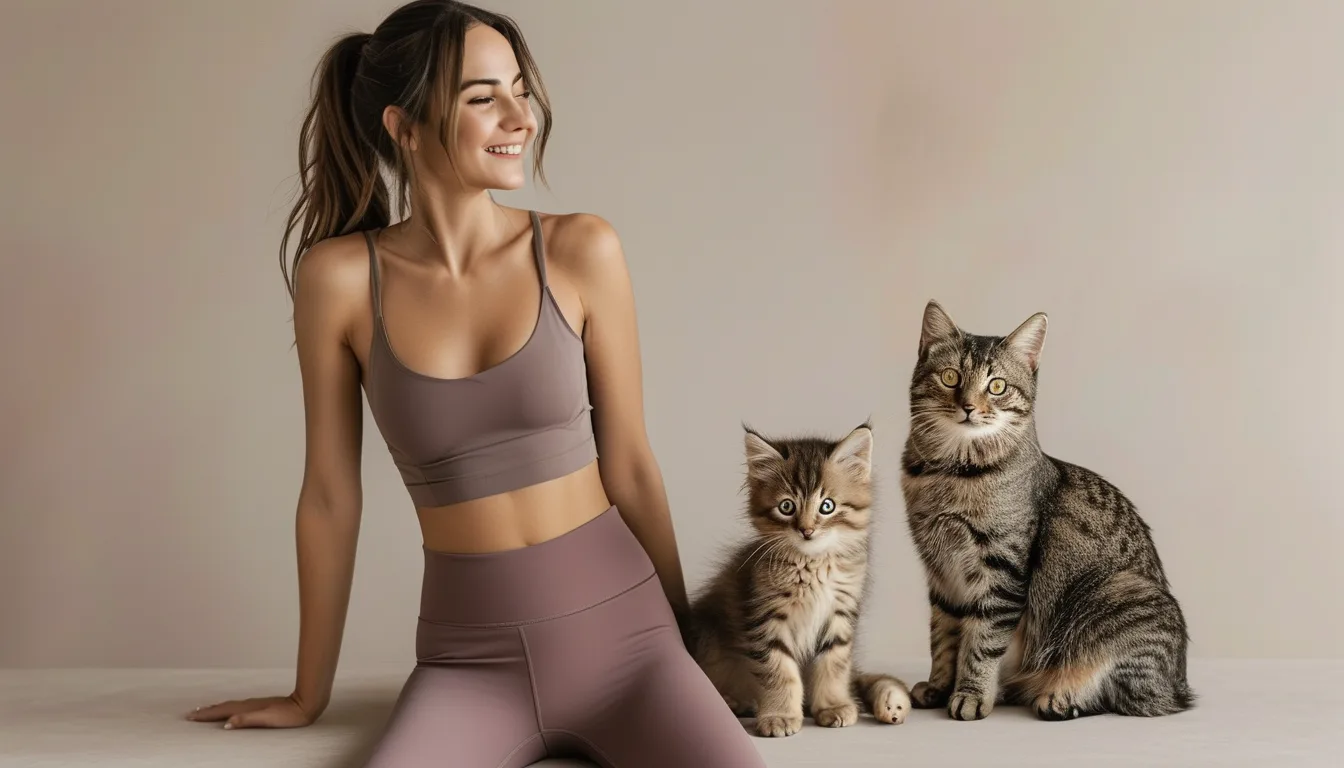
The Pet-Hair Test: Which Workout Fabrics Actually Repel Fur Best
Quick Answer: The workout fabrics that repel fur best combine a smooth, tight knit surface (fewer places for fur to catch), lower static-generating fiber types in a compressive weave (less triboelectric attraction), and a color/texture choice matched to your pet’s coat so any fur that does land is less visible. No single fabric wins every category — the best approach is running your own quick comparison test rather than trusting a label.
Every pet owner who works out at home has done the unscientific version of this test already: wear five different leggings over a week, notice which ones come out of a play session looking fine and which ones look like they lost a fight with a shedding animal. It turns out that instinct is tracking something real and measurable. Here’s how to actually compare fabrics on purpose, so you’re buying based on evidence instead of vibes.

How Do You Actually Test a Fabric’s Fur Resistance?
You don’t need a lab — you need a consistent method. The simplest real-world test: pick two or three leggings or tops of different fabric types, sit or kneel near your pet for the same amount of time (five minutes is plenty), then compare how much fur is visibly clinging before you touch or brush the fabric at all. That untouched snapshot tells you how much fur the fabric attracted passively, which is the number that actually matters for daily wear.
A second useful test: after that five minutes, run one lint roller pass, identical pressure, across each fabric, and count roughly how many passes it takes to get each one visibly clean. This tells you about release, which is a separate property from attraction — some fabrics don’t attract much fur but hold on tight to what does land, while others attract more but let go easily.
Do this once in dry weather and once on a humid day if you can, since humidity changes static behavior significantly, and a fabric that performs great in July might disappoint in January. Keep it simple: same pet, same room, same rough time near them, and just watch what actually happens rather than reasoning it out in the abstract. Two fabrics that look identical on a spec label can behave completely differently in this kind of side-by-side.
Smooth Tight Knits vs. Looser, Fuzzy Textures — What’s the Real Difference?
Fabric surface texture is the single biggest lever in fur attraction, more than brand or price point. A smooth, tightly knit fabric — the kind used in compressive leggings and second-skin tops — presents a relatively flat surface with minimal gaps between fibers. Fur has fewer places to physically lodge into, and what does land tends to sit loosely on top, where it’s easily brushed or rolled off.
A looser or fuzzy-textured fabric — brushed fleece interiors, looped terry-style knits, or anything marketed as “ultra-plush” — has raised fiber ends and open gaps by design, since that texture is what creates warmth and softness. Those same raised fibers act as physical catch points for fur strands, and once fur works into the gaps between loops, it’s genuinely harder to remove, sometimes requiring multiple lint-roller passes or a trip through the wash.
This is a real trade-off, not a marketing distinction: a brushed-interior legging will almost always feel cozier against skin than a compression knit, but it will also almost always collect more fur. If you’re choosing a piece specifically to wear during floor time, playtime, or cuddle sessions with your pet, weight the decision toward smooth knits even if it means giving up a little softness — you can save the plush textures for solo workouts when your pet’s elsewhere.

Does Fiber Type (Synthetic vs. Natural) Change Static Attraction?
Yes, and this is where a lot of pet owners get the advice backward. Synthetic fibers like polyester and nylon sit further apart from animal fur on the triboelectric charging scale than natural fibers like cotton do, which means friction between synthetic fabric and fur tends to generate a stronger static charge — and stronger charge means stronger attraction.
That sounds like an argument for switching to all-cotton workout gear, but it’s not that simple. Weave and knit tightness has a bigger practical effect than fiber type alone — a tightly knit synthetic-spandex blend often out-performs a loose cotton-blend knit on total fur pickup, because there’s simply less surface area and fewer gaps for fur to interact with, static or not.
The realistic strategy: within synthetic performance fabrics (which most people prefer for actual workouts, since cotton doesn’t wick sweat or hold compression well), choose tight, smooth compression knits over anything brushed, and consider keeping a fabric softener or anti-static spray in rotation, since both leave a light conductive residue that reduces static buildup regardless of the base fiber. Humidity also matters here — the same synthetic fabric will attract noticeably less fur on a humid day than a dry one, since moisture in the air helps static charge dissipate instead of building up.
Does the Color of Your Fabric (or Your Pet’s Fur) Actually Matter?
It matters for visibility, not attraction — an important distinction. Fabric color and texture don’t change how much fur physically sticks (that’s governed by static and weave, covered above), but they change how noticeable that fur is once it’s there, which is often what actually bothers people day to day.
The rule of thumb: contrast is the enemy. Light-colored fur (cream, white, golden) shows up starkly against dark fabric like black or navy, while dark fur (black, brown, grey) stands out sharply against light heather grey or white fabric. If you know your pet’s coat color, buying fabric in a similar or adjacent tone — a caramel-heathered legging for a golden-furred dog, a charcoal-heather top for a black cat — genuinely reduces how visible any clinging fur is, even though the actual amount of fur on the fabric hasn’t changed.
Heathered and marled fabrics (fabric knit from two or more slightly different toned yarns) have a practical edge here over solid colors, because the mixed-tone surface visually camouflages stray fur of multiple shades better than a flat, single-tone fabric does — worth knowing if you have multiple pets with different coat colors, or a pet whose coat changes seasonally.
FAQ: Fur-Repelling Fabric Questions, Answered
Is there one single “best” fabric for pet owners, or does it depend on the pet?
It depends somewhat on your pet’s fur length and texture, but the underlying principles hold across most pets: tight smooth knits beat loose fuzzy ones, and matched or heathered color beats stark contrast. A short-haired cat and a long-haired dog will both do better in a compression knit than a brushed fleece.
Do fur-resistant fabric treatments or sprays actually work?
Anti-static and fabric-protector sprays genuinely reduce static-driven attraction temporarily, similar to how dryer sheets work, by leaving a light residue that helps dissipate charge. They wear off with washing and time, so they’re a supplement to fabric choice, not a substitute for it.
Why does the same legging seem to attract more fur in winter?
Indoor heating drops humidity significantly in winter, and low humidity lets static charge build up and persist rather than dissipating into the air. The fabric hasn’t changed — the air around it has.
Should I avoid dark fabric entirely if I have a light-furred pet?
Not entirely, but expect more visible fur and plan for more frequent lint-rolling. If dark colors are a core part of your wardrobe, prioritizing a smooth tight knit becomes even more important, since it reduces total fur pickup even though contrast will still show what does land.
TL;DR:
- Run your own side-by-side fur test — untouched attraction and lint-roller release are two separate properties
- Smooth, tight knits beat brushed or looped textures for both attraction and easy removal
- Synthetic fibers generate more static than natural ones, but tight weave often matters more than fiber type
- Fabric color doesn’t change fur attraction, only visibility — match tones to your pet’s coat for a cleaner look
Skip the guesswork: five minutes of side-by-side testing tells you more about a fabric’s fur resistance than any product label will.
See It in Motion
Seen here: Super High Waist Embossed Yoga Leggings with Inner Pocket — shop it on bubblelime.com
Keep Reading
This article is for general informational and styling purposes only. Fit, sizing, and product availability may vary.