Why Dog Walk Layers Fail When Nothing Else Does
Quick Answer: Activewear is designed around steady-state heat production. A dog walk alternates between brisk walking and standing still, so you generate heat, then stop generating it while damp, repeatedly. Standard technical layers ventilate for the moving phase and lose heat fast during the stops. The fix is a wind-blocking outer you can open, a base layer that does not hold moisture, and accepting you will be slightly cool while moving so you are not freezing while stopped.
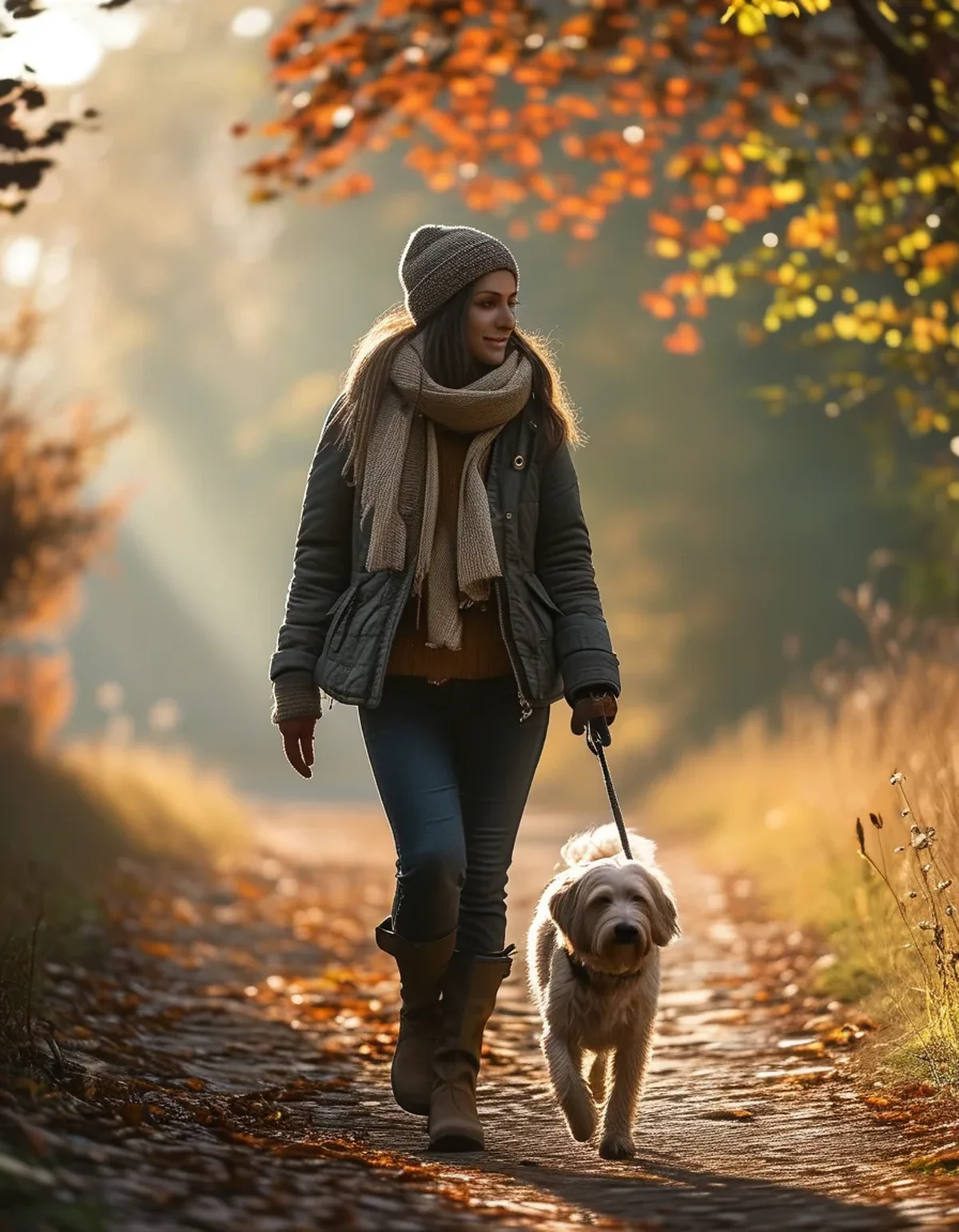
You are too hot on the way out and cold within two minutes of stopping.
Then your dog finds something interesting and you stand there for six minutes getting colder.
No single layer solves this, because the problem is not warmth. It is variability.
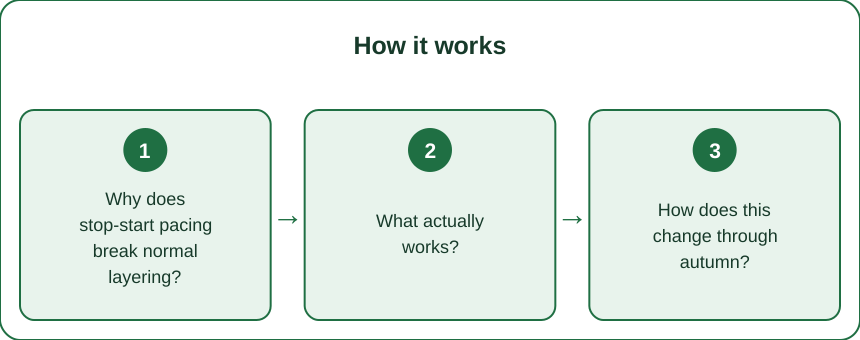
Why does stop-start pacing break normal layering?
Because layering assumes a roughly constant rate of heat production, and a dog walk has nothing of the kind.
Heat output swings enormously. Brisk walking produces several times the heat of standing still. The same clothing cannot be correct for both, which is the entire problem in one sentence.
Evaporative cooling continues after you stop. You are damp from the walking phase, and evaporation keeps pulling heat out while you are no longer producing any. This is why the stops feel disproportionately cold.
Wind exposure is highest when stationary. Moving generates apparent wind but also keeps you warm. Standing still in real wind, damp, is the coldest configuration of the whole walk.
Stops are longer than people estimate. Sniffing, greeting other dogs, waiting at a road. A one-hour walk commonly includes 15 to 20 minutes of standing.
Extremities lose out first. Hands holding a lead and a bag, in the wind, without moving. Hands are the first thing to fail on a dog walk and the last thing people plan for.
And you cannot easily add layers mid-walk. With a lead in one hand, taking a jacket on and off is genuinely awkward, which is why adjustable outers beat swappable ones.
What actually works?
Build for the stops, ventilate for the moving.
Wind-blocking outer with a full zip. The zip is the adjustment mechanism. Open on the move, closed at the stops. A full zip is worth far more than any fabric marketing claim here.
Underarm or chest vents if available. These let you dump heat without opening the front to wind.
A base layer that does not hold water. Merino or a good synthetic. Cotton is the failure mode, because it stays wet and keeps cooling you through every stop.
Start slightly cool. If you are comfortable at the door, you will be too hot in five minutes and clammy for the rest of the walk. Being slightly cool for the first five minutes is the correct calibration.
Pockets that work with a lead. Hand-warmer pockets you can use one-handed, and a secure pocket for a phone that does not need two hands to open.
Gloves you can operate a lead and a bag in. Thin liner gloves beat thick ones for this, because the failure mode is taking them off, not insufficient insulation.
How does this change through autumn?
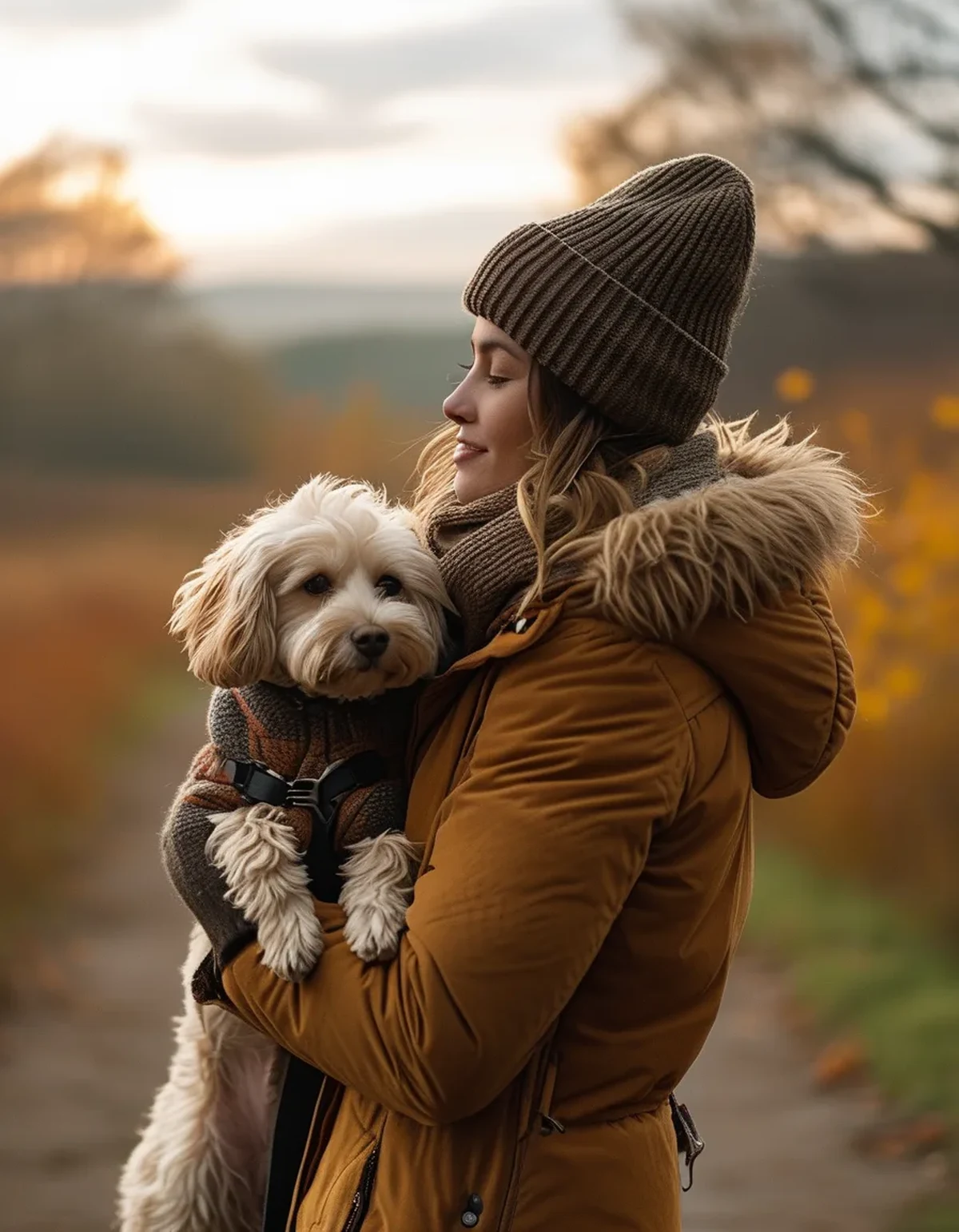
September to November is when dog walk clothing goes wrong most reliably, and for a specific reason.
Morning and evening diverge sharply. An 8am walk and a 6pm walk can differ by 8 to 10C in autumn, so one set of kit no longer covers both.
Damp becomes the dominant variable. Autumn is less about cold and more about wet — wet grass, wet dog, drizzle. Water resistance matters more than insulation for most of the season.
Darkness demands visibility. Once evening walks are in the dark, reflectivity stops being optional. It is worth buying for on both you and the dog.
Wet dogs change everything. A dog that shakes near you, or leans on you, transfers a surprising amount of water. Fabrics that shrug it off matter more than in summer.
Mud arrives before cold does. Trousers and shoes take the hit weeks before you need a warm coat.
Seasonal note: the trap is buying a warm coat in October when the actual problem is a wet, windy coat in September. Wind and water resistance solve autumn dog walks; insulation only becomes the priority once temperatures drop consistently below about 5C.
5 Dog Walk Clothing Mistakes
Dressing for the walking pace. You will be too warm on the move and freezing at every stop. Dress for the stops and ventilate.
Cotton anywhere near your skin. It absorbs, holds and keeps cooling you. It is the single worst base layer choice for stop-start activity.
Thick gloves. They come off for lead work and bag handling, and gloves in your pocket warm nobody. Thin, dextrous gloves stay on.
A pullover outer layer. With a lead in one hand, anything you cannot open one-handed is effectively not adjustable.
Ignoring visibility until it is fully dark. Dusk is more dangerous than night because drivers are not yet expecting to look for pedestrians.
And the recurring one: wearing your good activewear. Dog walks are harder on clothing than any workout — mud, claws, pulling, wet fur and pilling. Keep a dedicated set and your gym kit lasts twice as long.
FAQ: Dog Walk Clothing, Answered
How cool should I feel when I leave the house?
Slightly cool, to the point of mild reluctance. If you are comfortable at the door you are overdressed.
Is a waterproof or a windproof more useful in autumn?
Windproof with water resistance covers more autumn days. A full waterproof is worth having for genuine rain but is often too warm otherwise.
What is the best base layer?
Merino for odour resistance and warmth when damp, synthetic for durability and price. Both beat cotton comprehensively.
How do I keep my hands warm while holding a lead?
Thin liner gloves plus a jacket with hand-warmer pockets, and swap hands regularly. Thick gloves usually end up in a pocket.
Do I really need reflective gear?
Once you are walking at dusk or later, yes, and for the dog as well as yourself.
Why does dog walk clothing wear out so fast?
Wet fabric abrades faster, claws catch knits, and pulling stresses seams. A dedicated set is the practical answer.
TL;DR:
- Dog walks alternate between high and near-zero heat production, which standard layering does not handle.
- Dress for the stops, then ventilate with a full zip while moving.
- No cotton near skin; damp fabric keeps cooling you at every lamp post.
- Start slightly cool, use thin dextrous gloves, and prioritise wind and water resistance over insulation in autumn.
- Keep a dedicated set — dog walks destroy clothing faster than the gym does.
Tonight, leave the house feeling slightly underdressed. By the second lamp post you will understand why.
Keep Reading
This article is for general informational and styling purposes only. Fit, sizing, and product availability may vary.